Portfolio

Experiments on the autonomy frontier

Hands-on R&D across humanoid robotics, teleoperation, quadruped platforms, multi-robot coordination, and the low-level systems that make them work in the real world.

Humanoid robotics

Teleoperation, leader-follower, and autonomy on real humanoids

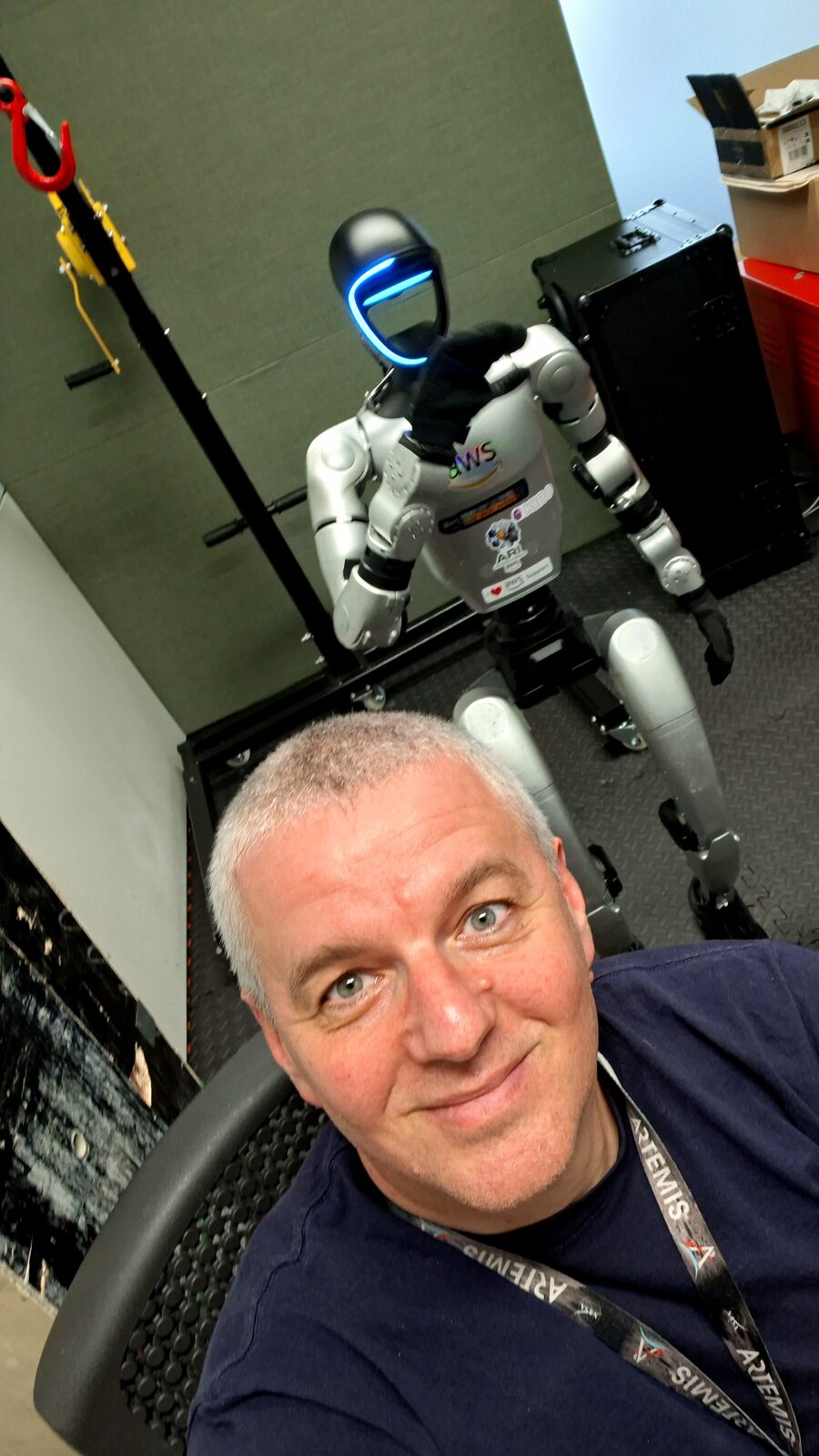
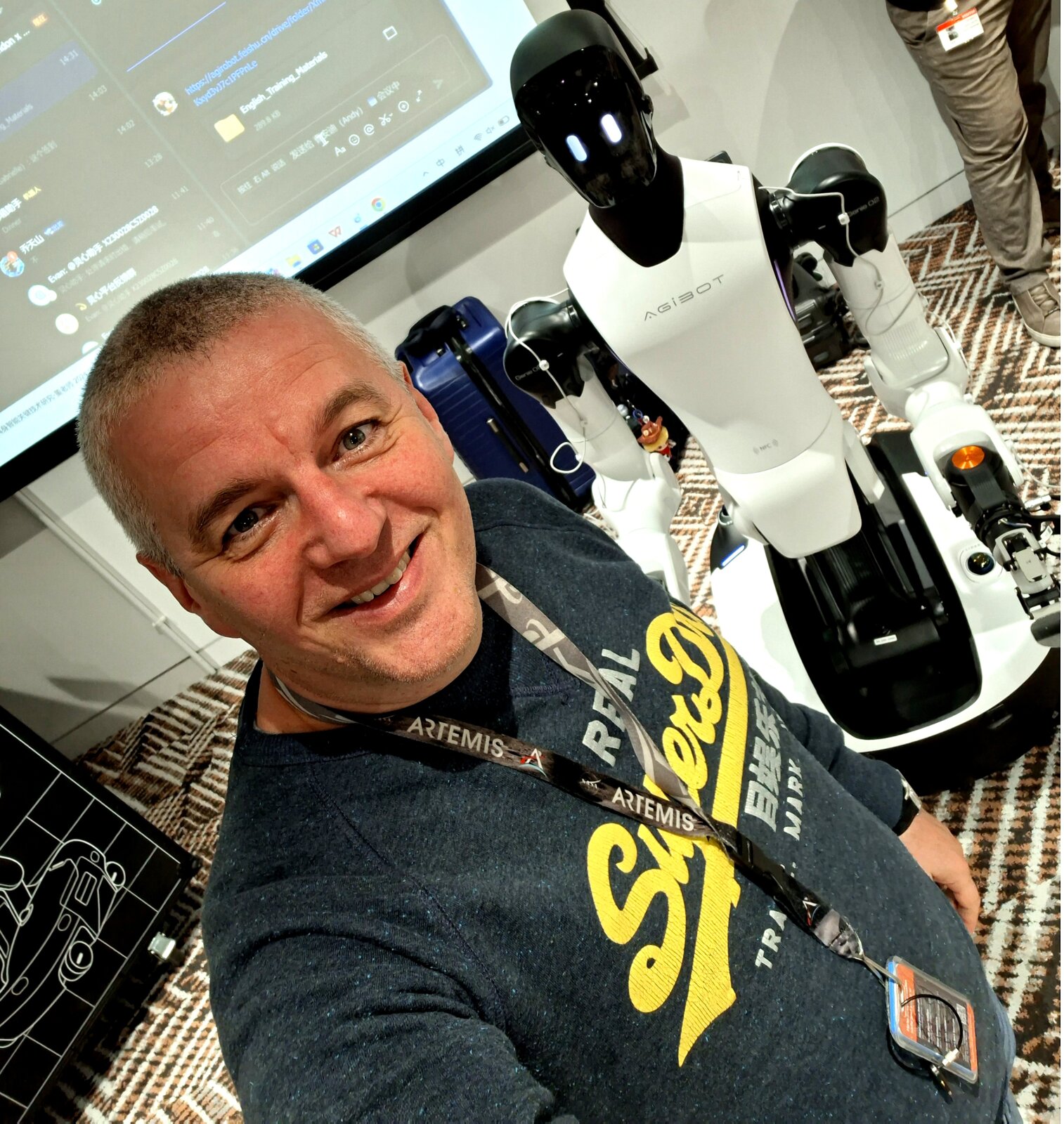
Current focus: Unitree G1 and AGIBOT A2. Where off-the-shelf humanoids become genuinely useful depends less on hardware and more on how you drive, perceive, and recover.

Janos with the AGIBOT A2 humanoid robot
HumanoidsTeleoperationLeader-follower

Vision-based teleoperation & leader-follower control

Real-time arm and hand tracking pipelines that mirror an operator's motion onto humanoid platforms. Built around off-the-shelf cameras and landmark-detection models, with safety-aware kinematic retargeting that respects each platform's reach, torque, and self-collision envelope.

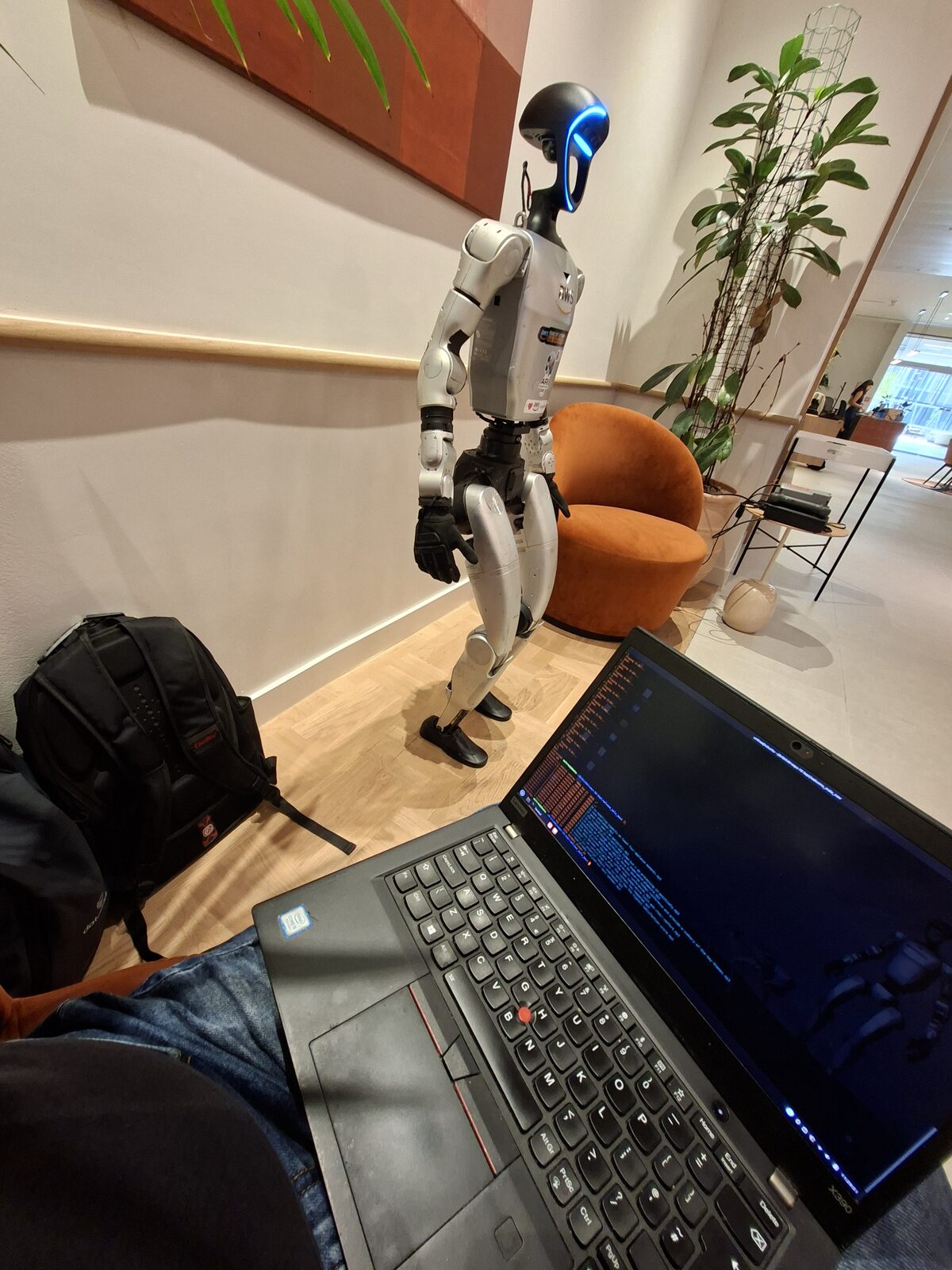
Running today on the Unitree G1 and AGIBOT A2: low-latency teleop, position/torque mode blending, and operator-aware hand mapping. This is the groundwork for shared autonomy. The operator provides intent, the robot handles stability and local control.

Unitree G1 humanoid walking in a real-world indoor environment
HumanoidsAutonomy

Autonomous behaviour for walking humanoids

Perception, task-level planning, and recovery strategies on top of commercial humanoid platforms. Focus on robustness in human environments: doorways, uneven floors, soft surfaces, and crowds, where motion-capture-style precision breaks down.

Unitree G1 humanoid in a development lab setting
HumanoidsDeployment

Picking the right morphology for the job

First-hand experience across walking humanoids and humanoid torsos on wheeled bases. "Humanoid" is not one answer: each form factor has a sweet spot, and shipping value in the real world starts with knowing which one you actually need.

Deep diveHumanoid use cases

Walking humanoids vs. wheeled torsos: where each wins

Walking (bipedal) humanoids. Right for environments built for humans: stairs, uneven terrain, mixed indoor/outdoor sites, and demonstrations where human-like presence matters. The cost is real: slower top speed, tight battery budgets, balance-critical motion, and higher price per unit. Good fits: human-robot collaboration research, service/retail front-of-house, education and outreach, rehabilitation and gait studies, construction site assistance where terrain is unpredictable.

Humanoid torsos on wheeled bases. Right for flat-floor environments with heavy manipulation demands. Trades legs for runtime, payload, stability, and cost. Good fits: warehouse pick-and-place, hospital logistics and material transport, lab-automation and chemistry benches, reception and concierge, retail back-of-house, light assembly. Dramatically more stable for precision manipulation because the base isn't fighting balance control.

Mobile manipulators (arm on a base). Right when you don't need the human form factor at all. Lowest cost per deployed unit, longest uptime, easiest to integrate with existing floor plans and safety zones.

The point of first-hand experience is knowing when not to use a walking humanoid. Most warehouse and hospital use cases don't need legs, and buying legs you can't use is the single most common failure mode in humanoid procurement.
Multi-robot & swarms

Fleets that coordinate, not just robots that act alone

RoboticsMulti-agent AIR&D

Autonomous multi-robot collaboration

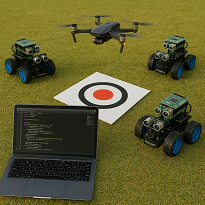
Seamless communication and coordination between multiple robots, enabling them to work together intelligently, efficiently, and adaptively. Hands-on experimentation in the physical world: teams of robots exploring environments, finding and recognising objects, and sharing what they discover with one another through navigation, LiDAR, and advanced pathfinding.

Beyond ground robotics: drone-and-ground-robot teamwork on tasks like search-and-rescue, environmental mapping, and inspection, with aerial and ground robots pooling their senses to cover more ground, reach difficult places, and help each other complete the task.

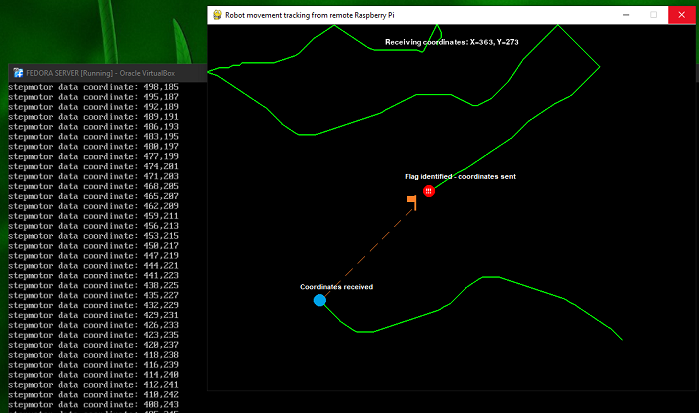
Capture-the-Flag robotics scenario
RoboticsAI teaming

Capture-the-Flag robotics

A playful multi-robot testbed: autonomous ground robots work together to find and reach moving goals, exercising coordination, planning, and shared decision-making in real environments.

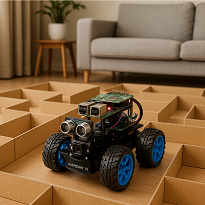
Raspberry Pi robot navigating a maze
Raspberry PiPathfinding

Raspberry Pi swarms & PiCar-X

Simple yet highly practical platforms as a foundation for autonomous navigation, object identification, and swarm behaviours.

Raspberry Pi drone platform
DronePi platform

Pi-based aerial platform

Lightweight drone built around a Raspberry Pi: a flexible base for research into autonomous flight and sensor fusion.

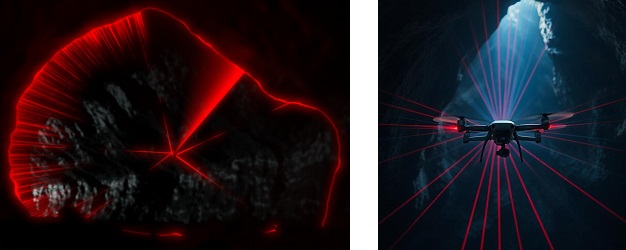
Prometheus-style LiDAR mapping drone
LiDARDroneMappingWork in progress

LIDRBee · "Prometheus"-style mapping

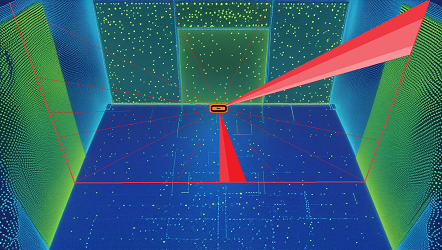
An ongoing hobby experiment, researching and building toward a fast, reactive flight controller that uses depth analysis from LiDAR and ultrasonic distance scanners at ≥10 Hz. The idea: a drone that runs rapid lo-res forward-facing scans with its onboard sensors (LiDAR, ultrasonic rangefinders, and optical cameras) to map its immediate surroundings, spot and classify obstacles, and work out safe flyable paths on the fly.

The plan is for an obstacle-avoidance layer to react immediately to proximity data while positioning logic adjusts speed, heading, and lateral position. As the drone moves, it would log LiDAR slices and incrementally build up a 3D map of the environment. Very much a tinker-and-learn project. Part research, part build-it-and-see.

LIDRBee drone LiDAR scanner prototype
Quadruped robotics

Where legs beat wheels, and vice versa

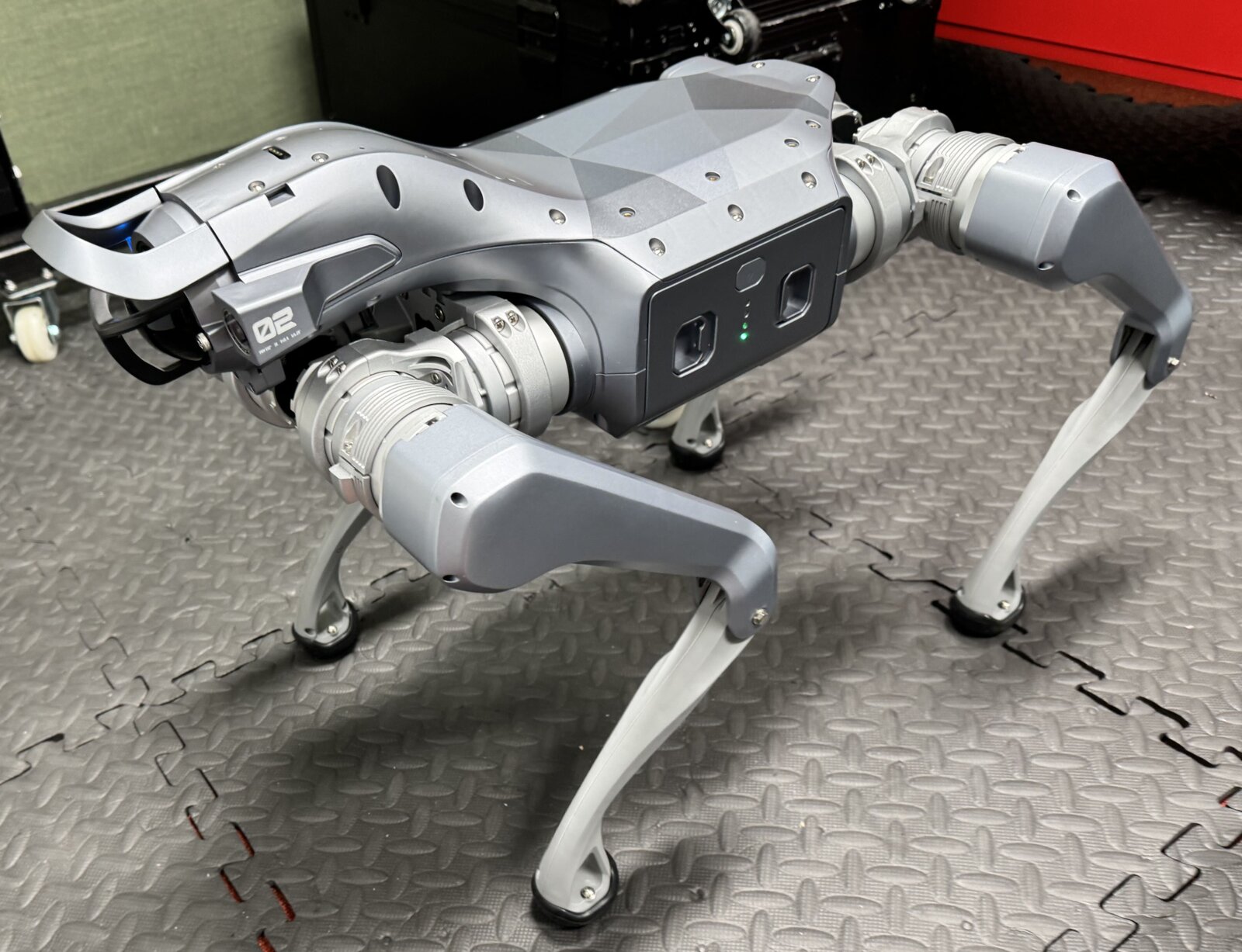
Platforms like the Unitree Go2 excel precisely where humanoids struggle: unstructured outdoor terrain, stairs, narrow corridors, and long inspection runs where a human-sized robot would be in the way.

Unitree Go2 quadruped robot in a lab environment
QuadrupedUnitree Go2Autonomy

Autonomy stacks and real-world deployment patterns

Current work on quadrupeds focuses on practical autonomy: the inspection pass, the site survey, the data-gathering run, not demo-floor acrobatics. The use cases below are where quadrupeds genuinely earn their keep today.

Industrial inspection

Scheduled autonomous rounds of plants, substations, and data centres. The robot carries thermal and visible-light cameras to flag heat anomalies, corrosion, leaks, and gauge readings on a repeatable path. Replaces dull or dangerous manual rounds and generates a time-series dataset the human operator can trust.

Construction & civil engineering

Autonomous site surveying with photogrammetry and SLAM, delivering progress scans and as-built comparisons without stopping work on the ground. Night-shift autonomous passes are a particularly good fit: the site is clear and the data is fresh for the morning stand-up.

Where quadrupeds don't win: flat warehouse floors (wheeled bases are faster and cheaper), fixed-infrastructure inspection where a camera on a rail does the job, and anything requiring sustained high-payload manipulation. Picking the right robot for the job is the first design decision, not the last.

Low-level & Linux

The systems underneath

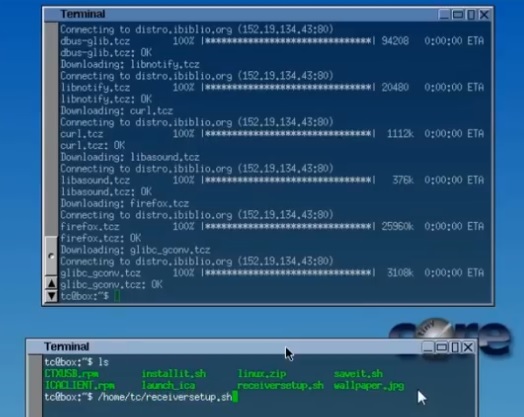
TinyCore-based specialised Linux build
LinuxMinimal

Specialised Linux projects

Purpose-built minimal Linux distributions, tuned for footprint, security, and specific hardware targets.

Experimental OS screenshot
Low-levelKernel

Experimental OS & kernel work

Boot, kernel, and assembly-level experiments exploring what a lean modern operating system could look like.

Interested?

Let's build smarter machines.

Humanoid robotics, autonomy, AI, and the hard problems in between. Happy to talk about collaborations, consulting, or research.


Contact page →